


Key Takeaways
- The best legal virtual assistant companies combine law-specific training, dedicated (not shared) assistants, and software fluency in tools like Clio and MyCase. Generic VA platforms simply cannot fill that role.
- According to the 2025 Clio Legal Trends Report, lawyers spend only about 3 hours of an 8-hour workday on billable work, so delegating admin tasks is a revenue strategy, not just a cost-cutting move.
- Firms that hire Legal-Trained virtual assistants from the Philippines or Latin America can cut staffing costs by up to 60% compared to U.S.-based in-house hires, with full-time support available from $2,227/month.
- Virtual Staffing screens thousands of candidates daily from a global pool of 300,000+ and places only the top 1%, so law firms get Pre-Vetted Talent that is ready to contribute within 2 to 3 business days.
Running a law firm means juggling a heavy caseload, tight deadlines, and constant client communication, usually with a lean team. The problem is that administrative work keeps piling up and crowding out the billable legal work that actually drives revenue. That is exactly why so many competitive firms in 2026 are turning to Legal-Trained virtual assistants: dedicated remote professionals who understand legal workflows, know U.S. law firm operations, and work directly inside the software your firm already uses.
This guide cuts through the noise. You will find a data-backed look at the best legal virtual assistant companies in 2026, a clear breakdown of what each one does well (and where each falls short), and a practical framework for choosing the right fit for your practice.
Why Law Firms Are Rethinking How They Staff
The numbers paint a pretty clear picture. The 2025 Clio Legal Trends Report found that lawyers spend only about 3 hours of an 8-hour workday on billable work. The rest goes to intake calls, scheduling, document prep, client follow-ups, and other tasks that a legal virtual assistant can take off your plate entirely.
The financial case is just as compelling. A fully loaded in-house legal assistant costs between $90,000 and $120,000 annually once you factor in salary, benefits, payroll taxes, and office overhead. A full-time virtual legal assistant sourced from the Philippines or Latin America runs $20,000 to $35,000 per year, which works out to a 60 to 72% reduction with no sacrifice in quality or availability.
What Separates the Best Legal Virtual Assistant Companies from the Rest
Not every virtual assistant company is built for law. Most general VA platforms skip legal-specific screening, skip U.S. workflow training, and skip dedicated placement. That gap matters a lot in a compliance-sensitive, client-facing environment.
When you are evaluating the best legal virtual assistant companies, here are the factors that consistently predict whether a placement will actually work:
- Law-specific screening and training. Candidates should demonstrate real knowledge of legal terminology, intake procedures, document standards, and confidentiality obligations before they ever join a firm.
- Dedicated (not shared) assignment. Your assistant should work exclusively for your practice. Shared-pool models create inconsistency and knowledge gaps that show up in client interactions.
- Software fluency. The top providers train their assistants in Clio, MyCase, CosmoLex, PracticePanther, LawPay, and NetDocuments. An assistant who needs to learn your software from scratch adds friction from day one.
- Transparent, predictable pricing. Hourly billing models make it hard to budget. Flat-rate monthly plans give firms cost certainty.
- Fast placement. Law firms cannot afford to wait six weeks to fill a support role. The best providers get vetted assistants placed in 2 to 3 business days.
- Security protocols. Confidentiality agreements, NDAs, and secure access standards are non-negotiable in a legal environment. Any provider that cannot clearly describe their data security process is a risk.
The 5 Best Legal Virtual Assistant Companies in 2026
1. Virtual Staffing: Best Overall for U.S. Law Firms
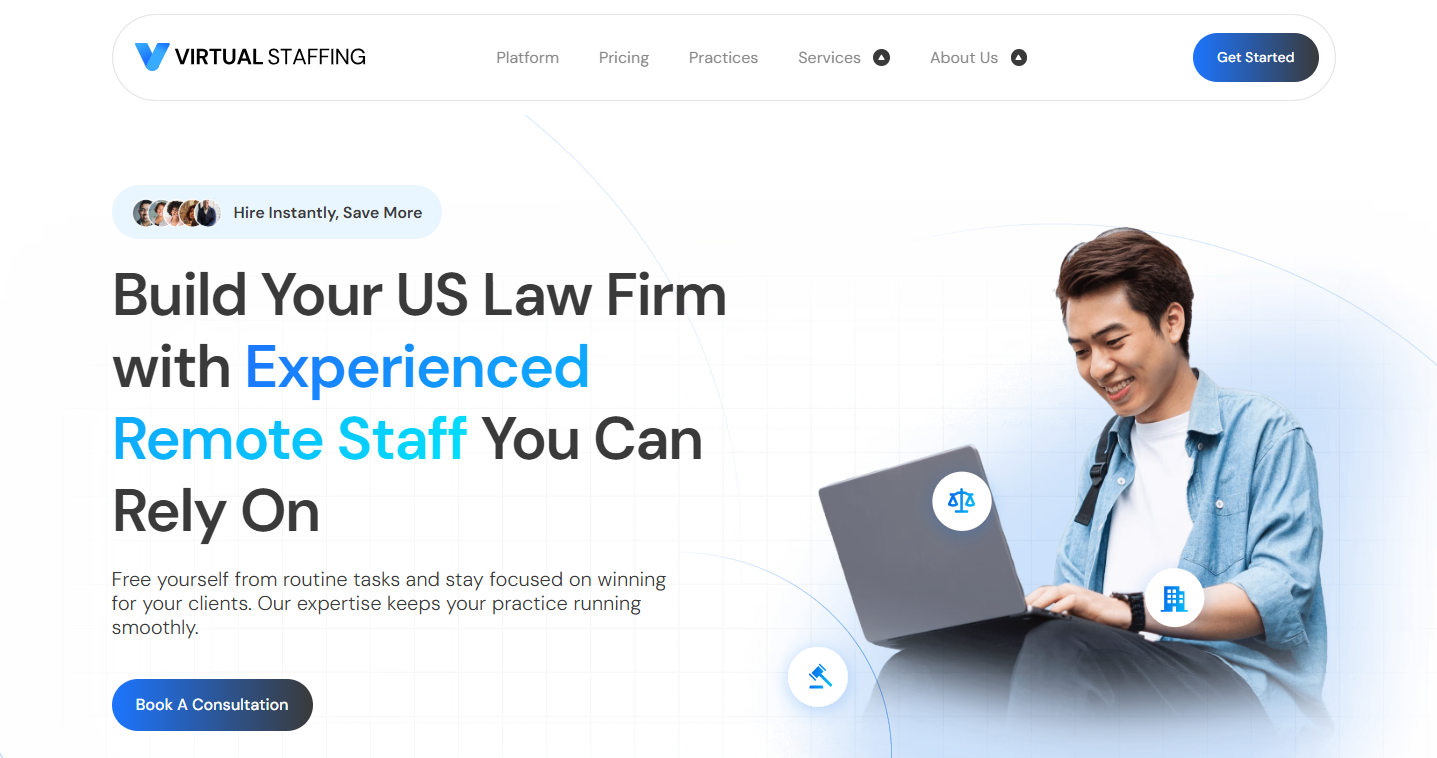
Virtual Staffing is built specifically for the legal industry. Every assistant placed through the platform is screened for legal knowledge, trained in U.S. law firm workflows, and assigned exclusively to one firm. That last part matters more than most firms realize. You are not sharing your assistant with three other clients. You get someone who learns how your practice runs and gets better at supporting it over time.
The platform serves solo practitioners, mid-size practices, and multi-attorney firms across 12+ practice areas.
Why it leads:
- Full-time support starts at $2,227/month with transparent flat-rate pricing, no hidden fees, and no long-term contracts
- Assistants come from a global Pre-Vetted Talent Pool of 300,000+ candidates; only the top 1% are placed
- Trained in Clio, MyCase, CosmoLex, LawPay, PracticePanther, and Rocket Matter so there is no ramp-up friction
- Placement in 2 to 3 business days
- Clients report 90% improved efficiency after delegating routine tasks; firms collectively save over 1,200 work hours each month
- Strict confidentiality protocols and NDAs in place from day one
- Optional add-ons include marketing, website management, and document automation
If your firm needs a consistent, embedded team member rather than a rotating contractor, Virtual Staffing is the right fit. Your assistant will understand how your practice operates, communicate professionally with your clients, and plug directly into your daily workflow from the start.
2. Legal Soft: Best for Firms Looking for a Managed Legal Staffing Model

Legal Soft provides remote legal staffing and operational support services designed specifically for law firms. In addition to Intake Specialists, Case Managers, Paralegals, and Legal Assistants, the company also offers services such as website management, marketing support, and document automation.
Legal Soft uses a managed staffing model, making it a potential fit for firms that prefer an all-in-one approach to adding legal support staff. Law firms can explore dedicated staffing solutions across practice areas while also accessing additional operational services through a single provider.
Best for: Law firms looking for legal staffing and operational support from one provider.
Key considerations:
- Dedicated legal support roles available
- Managed staffing model
- Additional services such as marketing and website support
- Flat monthly pricing structure
- Service offerings and pricing may vary depending on role and firm needs
3. Smith.ai: Best for Legal Intake Call Coverage
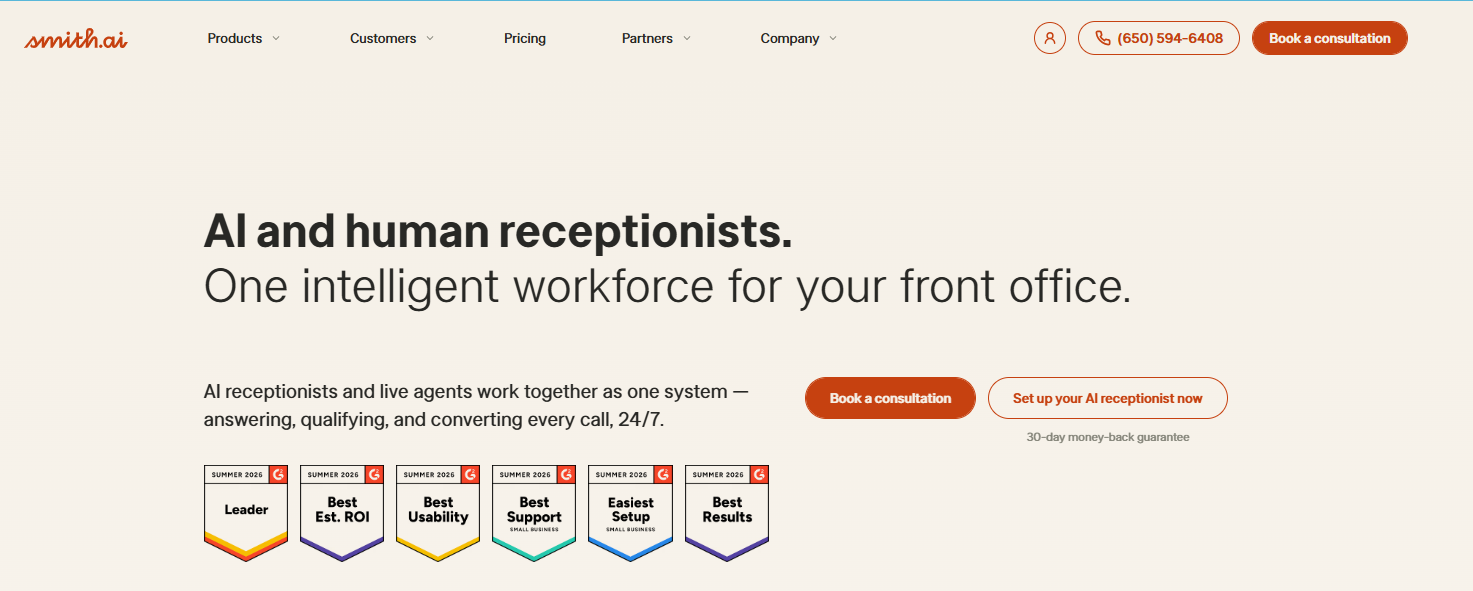
Smith.ai provides legal intake, virtual receptionist, and web chat services that help law firms manage inbound inquiries around the clock. The platform is best suited for firms that need reliable call coverage and lead qualification without adding in-house staff. Unlike dedicated staffing providers, Smith.ai uses a shared support model, so receptionists assist multiple firms rather than working exclusively for a single practice.
Best for: Law firms that need 24/7 intake coverage, call answering, and lead qualification.
Key considerations:
- 24/7 phone answering and web chat support
- CRM and practice management software integrations available
- Shared receptionist model rather than dedicated staff
- Primarily focused on intake and communication support
- Not designed for document preparation, paralegal work, or case management tasks
4. Virtual Latinos: Best for Bilingual Support at Competitive Rates

Virtual Latinos connects businesses with remote professionals from Latin America and is a popular option for firms that need bilingual English and Spanish support. Its model can work well for immigration, family law, and other practices that regularly serve Spanish-speaking clients. Unlike dedicated legal staffing providers, firms are typically more involved in candidate selection, onboarding, and day-to-day management.
Best for: Law firms that need bilingual support and want access to remote professionals in overlapping U.S. time zones.
Key considerations:
- English and Spanish bilingual candidates available
- Strong overlap with U.S. business hours
- Flexible hiring options based on firm needs
- Firms take a more hands-on role in managing staff
- Legal experience and specialization vary by candidate
5. Wishup: Best for Quick Hire with Legal Task Coverage
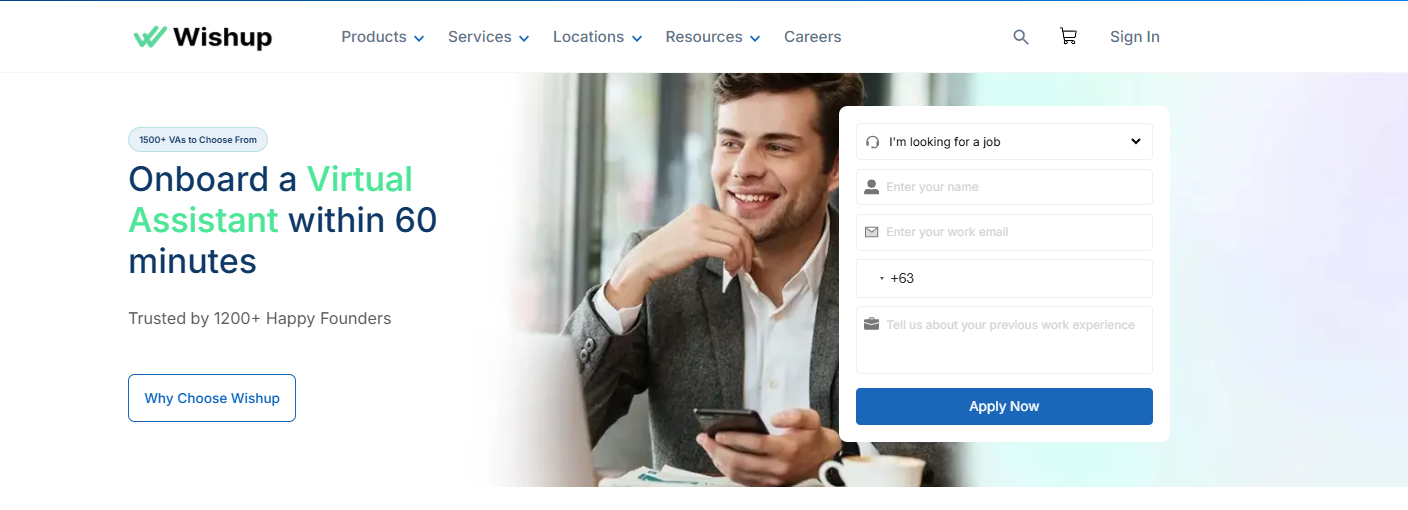
Wishup provides virtual assistant services across multiple industries and offers a quick onboarding process for firms that need administrative support. It can be a practical option for solo attorneys or small practices looking for help with scheduling, inbox management, research, and other day-to-day tasks. Unlike dedicated legal staffing providers, legal experience and specialization can vary depending on the individual assistant assigned.
Best for: Solo attorneys and small law firms that need general administrative support with fast onboarding.
Key considerations:
- Quick placement and onboarding process
- Assistants are trained to use a variety of business tools
- Flexible support for administrative and operational tasks
- Legal experience varies by candidate
- Not exclusively focused on legal staffing or law firm operations
Side-by-Side Comparison: Top Legal VA Companies
How Much Does a Legal Virtual Assistant Cost?
The cost depends mainly on where the assistant is based and whether pricing is hourly or flat-rate monthly. Here are the current 2026 benchmarks:
- U.S.-based legal virtual assistants: $25 to $50/hour (Upwork data), or roughly $4,000 to $8,000/month for full-time support
- Latin America-based assistants: $8 to $15/hour, or approximately $1,200 to $2,400/month full-time
- Philippines-based assistants: $6 to $12/hour, or approximately $1,000 to $2,000/month full-time
- Virtual Staffing flat-rate model: From $2,227/month for a full-time, dedicated, Legal-Trained assistant
For context, the U.S. Bureau of Labor Statistics reports the median annual wage for legal assistants at $66,510 as of May 2024. Add benefits, payroll taxes, and overhead and in-house staffing easily crosses $90,000 per year.
Firms using offshore and nearshore virtual staffing report savings of 60 to 72%, with annual cost reductions reaching $60,000 to $85,000 per assistant compared to in-house hiring.
What Tasks Can a Legal Virtual Assistant Handle?
A U.S. Law Experienced legal virtual assistant covers a lot more than scheduling. Here is a realistic breakdown of what a full-time placement can own:
Client Intake and Communication
- Answering and screening intake calls
- Sending engagement letters and onboarding documents
- Following up with prospective clients by email or phone
- Updating client records in case management software
Document Preparation and Management
- Drafting correspondence, demand letters, and standard motions
- Organizing case files and maintaining document version control
- Filing documents through court e-filing portals
- Preparing discovery requests and responses
Case and Calendar Management
- Scheduling consultations, depositions, and court appearances
- Tracking deadlines and statute of limitations dates
- Managing attorney calendars across multiple cases
Billing and Administrative Support
- Generating invoices and tracking payments in LawPay or Clio Payments
- Reconciling trust accounts
- Running conflict checks and maintaining contact databases
Research and Compliance Support
- Conducting preliminary legal research
- Monitoring regulatory updates relevant to your practice area
- Preparing case summaries and deposition prep materials
Key Questions to Ask Before You Hire
Before you commit to any legal virtual assistant company, make sure you get clear answers to these questions:
- Is the assistant dedicated to my firm only, or shared across multiple clients?
- What legal software platforms is the assistant trained on?
- What screening process qualifies candidates as Legal-Trained?
- What confidentiality and data security protocols are in place?
- What is the replacement process if the assistant is not a good fit?
- Are there long-term contracts, or can I go month to month?
Any provider that hesitates on dedicated assignment or security protocols is worth approaching with extra caution.
The Smartest Hire Your Firm Will Make This Year
The firms that are winning in 2026 are not necessarily the ones with the most attorneys. They are the ones running efficiently, delegating administrative work to skilled legal support staff, recovering billable hours, and keeping clients in the loop without burning out their lawyers.
The best legal virtual assistant companies help you get there. But the difference between a placement that works and one that wastes your time comes down to three things: legal-specific training, a dedicated (not shared) assistant, and real software fluency. Virtual Staffing is built around all three.
Virtual Staffing screens thousands of candidates daily from a global Pre-Vetted Talent Pool of 300,000+. Only the top 1% are placed. Assistants are trained in the legal software your firm already uses, assigned exclusively to your practice, and ready to contribute within 2 to 3 business days. Flat-rate pricing from $2,227/month means no billing surprises, and no long-term contracts means no unnecessary risk.
Ready to put 90% more efficiency to work for your firm? Book a free demo with Virtual Staffing today
Frequently Asked Questions
What does a legal virtual assistant do?
A legal virtual assistant takes on the administrative, documentation, intake, and scheduling work that eats up attorney time without producing billable hours. That covers managing client intake calls, drafting correspondence, preparing legal documents, maintaining case files in tools like Clio or MyCase, tracking court deadlines, and supporting billing. The scope depends on the assistant's training, but a full-time Legal-Trained placement can handle the full operational support cycle of a law firm.
How much does a legal virtual assistant cost per month?
Monthly costs range from around $1,000 to $8,000 or more depending on the assistant's location and the pricing model. U.S.-based assistants typically run $25 to $50/hour. Offshore and nearshore assistants from the Philippines or Latin America usually cost $6 to $15/hour, or $1,000 to $2,400/month for full-time support. Virtual Staffing offers a flat-rate starting at $2,227/month for a dedicated, full-time Legal-Trained assistant with no hidden fees and no long-term contracts.
Is it safe to use a virtual assistant for confidential legal work?
Yes, as long as the company enforces the right security protocols. Reputable providers require assistants to sign NDAs, work through secure access systems, and follow data handling procedures that align with legal ethics requirements. Virtual Staffing has strict confidentiality protocols in place from day one. Before you hire anyone, confirm that the provider has enforceable data security agreements and a clear process for handling sensitive client information.
Can a legal virtual assistant work during U.S. business hours?
Yes. Assistants from Latin America naturally overlap with U.S. time zones. Philippines-based assistants are routinely scheduled for U.S. business hours as part of their placement. Virtual Staffing builds assistant schedules around each firm's operational hours, so coverage is consistent no matter where the assistant is located.