


Key Takeaways
- Law firms with organized intake processes are generally better positioned to respond quickly, qualify leads consistently, and improve the client experience throughout the onboarding process.
- Reducing response times can help firms engage prospective clients sooner and decrease the risk of leads going to competing firms.
- Intake specialists help free up attorney time by handling client communication, lead screening, and administrative tasks before matters reach the legal team.
A client intake specialist is the first person a prospective client speaks to at a law firm. Without one, that first conversation either happens poorly or not at all and either outcome costs the firm cases.
The role sounds straightforward. But for most legal offices, the absence of a dedicated intake specialist is one of the biggest untracked revenue leaks in the practice. This guide explains exactly why intake specialists are not a luxury for growing law firms and what happens to the firms that treat them as one.
What Is a Client Intake Specialist?
A client intake specialist manages the initial stages of client interaction at a law firm. Their job is to answer inquiries, gather information about a prospective client's situation, screen cases for fit, and move qualified leads toward a consultation with an attorney.
They are not paralegals. They do not give legal advice. Their entire focus is the front end of the client pipeline: making sure every inquiry gets a fast, professional response and that attorneys only spend time on cases that have already been screened and documented.
The Real Cost of Not Having One
Most law firms are not aware of how many leads they lose before they ever have a chance to convert them. The problem is not marketing. It is what happens after the marketing works.
Slow Response Times Are Bleeding Revenue
According to Hennessey Digital's 2024 Law Firm Lead Form Response Time Study, firms that improved their response time from four or more hours to under one hour saw revenue increases of 20% or more without any additional marketing spend. Nearly 39% of law firms still take more than two hours to respond to inbound inquiries.
That gap is not a minor inefficiency. Every hour a potential client waits is an hour they spend searching for someone else. Personal injury, immigration, and family law clients in particular often contact three or more firms before making a decision. The firm that responds first and responds well wins.
When there is no dedicated intake function, calls get missed, voicemails pile up, and callbacks happen when attorneys or assistants have time, which is often not fast enough.
Attorneys Are Paying to Do Admin Work
When intake falls to attorneys or legal assistants, the firm is paying premium-rate salaries to answer screening questions, book consultations, and log case details into a CRM. That time is not billable, and it pulls attorneys away from the work that actually generates revenue.
For a firm with four attorneys, reclaiming 30 minutes per attorney per day from intake-adjacent tasks adds up to hours of recovered billable time every week. Over the course of a year, that is a meaningful number.
The First Impression Problem
A prospective client calling about a legal matter is often dealing with something urgent and stressful. If they reach a voicemail, get transferred twice, or speak to someone who sounds distracted and unsure, that first impression carries. It shapes their confidence in the firm before they ever meet an attorney.
A trained intake specialist changes that dynamic. Their entire job is to make that first call feel handled: warm, professional, and organized. That experience is what converts a hesitant caller into a signed client
What a Client Intake Specialist Does and Why Each Task Matters
Every responsibility in the intake role is connected to a specific business outcome. Here is the full picture:
First Contact Done Right
The intake specialist answers every inbound call, email, and chat inquiry as it arrives. Their tone, speed, and professionalism set the first impression of the entire firm. Clients do not distinguish between the intake specialist and the attorney when they form that impression. They just know how the firm made them feel.
Screening That Protects Capacity
Not every inquiry is worth an attorney consultation. The intake specialist uses preset criteria to filter cases by practice area, case size, geography, and other firm-specific parameters. This keeps unqualified leads from consuming consultation time and keeps the caseload focused on cases the firm is equipped to handle.
Documentation That Saves Time
Once a case is screened and qualified, the specialist collects what the attorney needs before the consultation: contact details, a timeline of events, key facts, relevant documentation, and initial damages information. The attorney walks into the consultation prepared, not discovering the case from scratch in the first five minutes.
Follow-Up That Recovers Lost Revenue
Many leads do not convert after the first contact. They need time. They are comparing options. A client intake specialist follows up at set intervals, staying professional and helpful without pressure. This step alone recovers a portion of leads that would otherwise go cold and sign with a competitor.
The Business Case: What Actually Changes When You Hire One
Strong intake processes often have a direct impact on how quickly firms respond to prospective clients, how consistently they follow up, and how organized the onboarding experience feels. Firms that invest in dedicated intake support are often better positioned to engage leads promptly, reduce administrative bottlenecks, and create a more consistent client experience.
Hiring a dedicated intake specialist helps centralize those responsibilities, allowing attorneys to spend more time practicing law while ensuring no potential client falls through the cracks.
Conversion Rates Improve Immediately
When every inbound inquiry gets a fast, professional response from someone whose only job is to convert leads, conversion rates go up. That improvement does not require new marketing spend or a new practice area. It comes entirely from handling the leads you are already generating more effectively.
Attorneys Reclaim Billable Hours
The downstream effect on attorney productivity is significant. Attorneys who are no longer fielding screening calls, chasing documents, or confirming consultations can redirect that time toward active case work. For a firm billing at $300 or more per hour, even modest time recapture translates into real additional revenue.
The Client Experience Improves Across the Board
Client satisfaction at a law firm is shaped heavily by the intake experience. A client who felt heard, informed, and well-organized from the first call starts the relationship with confidence. That confidence leads to fewer complaints during the case, stronger referrals afterward, and better online reviews. The intake specialist is the first investment in long-term client relationships.
Skills That Make an Intake Specialist Effective
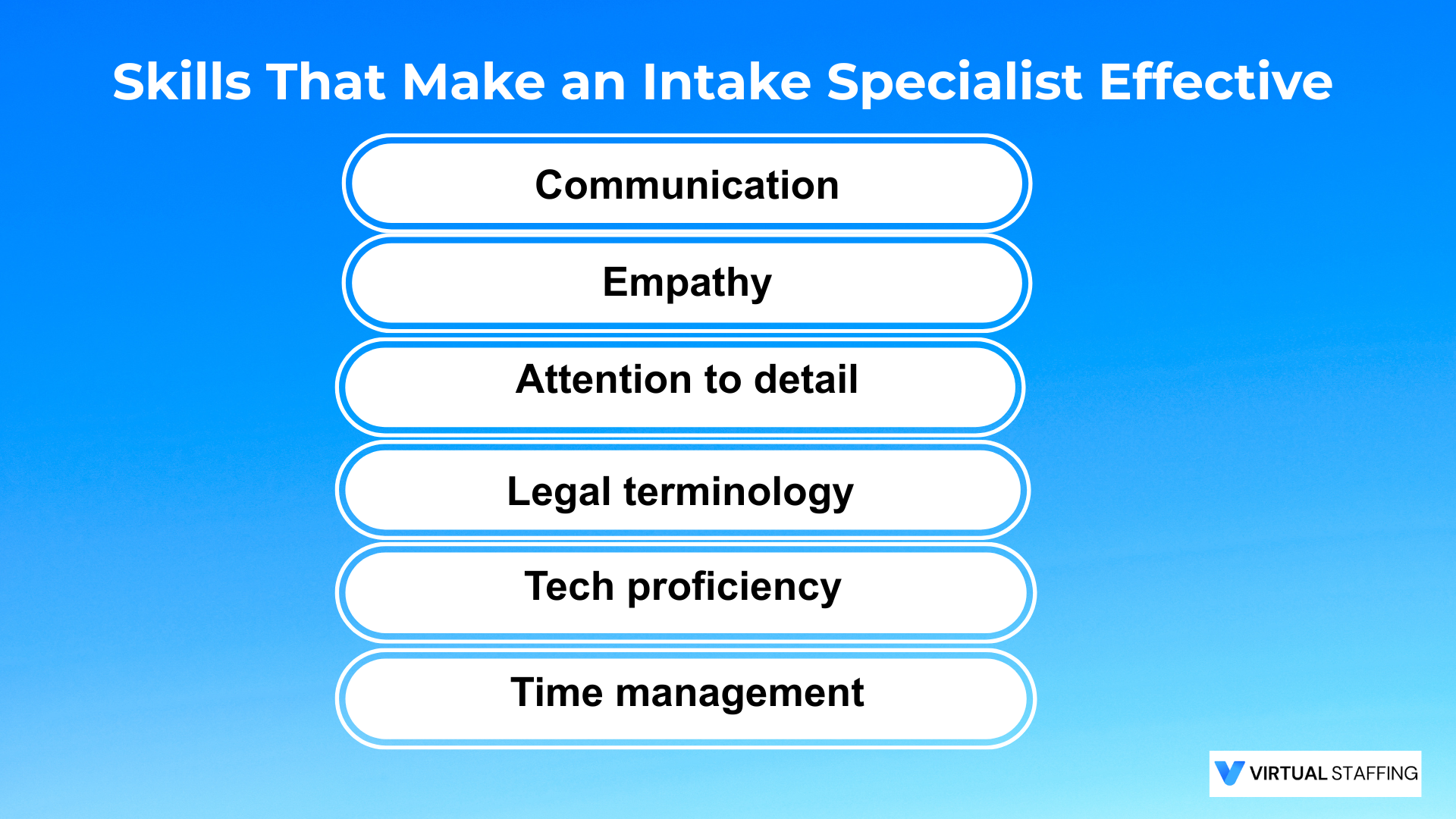
Not every communicator can do this job well. Here is what to look for:
- Communication. Clear, warm, and professional across phone, email, and chat. This is the highest-priority skill because it shapes every interaction.
- Empathy. Prospective clients calling a law firm are often in a difficult moment. The ability to listen without judgment and put someone at ease is not optional.
- Attention to detail. Errors in intake documentation affect conflict checks, case preparation, and billing. Accuracy matters from the first call.
- Legal terminology. Intake specialists are not attorneys, but they need enough familiarity with legal language to screen cases accurately and speak credibly with prospective clients.
- Tech proficiency. Intake specialists work in case management systems, CRMs, and scheduling tools every day. Software fluency determines how efficiently they can operate.
- Time management. High-volume intake means managing multiple open leads simultaneously without letting any fall through.
In-House vs. Virtual Client Intake Specialist
Both options work. The decision depends on your firm's volume, budget, and how much flexibility you need.
For firms managing high inbound volume, needing extended hours, or watching overhead carefully, virtual intake specialists have become the more practical option. They start faster, cost less per month, and come pre-trained in the legal software most firms already run. A virtual legal assistant can complement the intake role by handling post-engagement case support once a client is signed.
The question for most firms is not whether they need an intake specialist. It is whether they want to hire in-house or get started faster with a virtual option.
Your Intake Process Is Either Winning Cases or Losing Them
There is no neutral position in intake. Every inbound call either gets a fast, professional response from someone whose job is to convert it, or it goes to a voicemail, a distracted assistant, or no one at all.
The firms converting 40 to 50% of their leads are not doing something dramatically different on the marketing side. They have a structured intake process and someone dedicated to running it every day.
Virtual Staffing places trained, bilingual intake specialists with U.S. law firms starting at $2,227 per month, with no long-term contracts and onboarding in days. Book a consultation with Virtual Staffing and get your intake process running the way your caseload depends on.
Frequently Asked Questions (FAQs):
Why do legal offices need a client intake specialist?
Without a dedicated intake specialist, law firms miss calls, respond too slowly, and lose qualified leads to competitors. A client intake specialist ensures every inbound inquiry is answered quickly and professionally, which directly improves lead conversion and protects attorney time from administrative work.
What does a client intake specialist do at a law firm?
They answer inbound inquiries, screen cases for fit, collect case details, check for conflicts of interest, schedule consultations, enter information into the firm's CRM, and follow up with prospects who did not convert on the first contact.
How much does it cost to hire an intake specialist?
In-house intake specialists in the U.S. typically earn between $46,000 and $67,000 per year. When benefits and overhead are included, the all-in monthly cost often exceeds $5,000. Virtual intake specialists start at $2,227 per month on a flat, full-time rate with no overhead.
Do client intake specialists give legal advice?
No. Client intake specialists gather information, screen cases, and schedule consultations. They are not attorneys and cannot provide legal advice or legal strategy.
How quickly does hiring an intake specialist affect conversion rates?
The impact is typically immediate. When inbound leads receive faster, more professional first responses and consistent follow-up, conversion rates improve without any changes to marketing spend.
Can a virtual intake specialist handle the same tasks as an in-house hire?
Yes. A virtual intake specialist trained in legal workflows handles inbound calls, case screening, data entry, scheduling, and follow-up at the same level as an in-house employee, with faster onboarding and lower monthly cost. Many also offer bilingual English and Spanish support.
What types of law firms benefit most from an intake specialist?
High-volume consumer practices benefit the most, particularly personal injury, immigration, family law, criminal defense, and employment law firms. These practice areas see frequent inbound lead volume and direct competition for clients who contact multiple firms before deciding.
Is one intake specialist enough for a growing firm?
It depends on inbound volume. One full-time intake specialist can typically manage a consistent flow for a small to mid-size practice. Firms with higher lead volume or multiple practice areas may need additional coverage, which is easier to scale with virtual staff than with in-house hires.