

Key Takeaways
- A virtual intake assistant strengthens client communication and prevents lost opportunities from missed calls or delayed follow-ups.
- An effective intake process improves client satisfaction and supports long-term strategic growth.
- Intake specialists help law firms manage client data, scheduling, and CRM management consistently.
Pre-vetted virtual intake support allows firms to handle more clients without increasing overhead costs.
A law firm’s intake process is no longer an administrative afterthought. It is a non-negotiable growth function that directly impacts client satisfaction, case quality, and long-term practice growth.
A virtual intake assistant helps law firms manage client communication, collect essential information, and convert inquiries into new clients—without overwhelming attorneys or internal staff. As firms scale, intake operations must support both current and potential clients with timely communication, structured data collection, and professional follow-up.
This is where a trained virtual intake specialist becomes a strategic partner rather than just administrative support.
What Is a Virtual Intake Assistant?
A virtual intake assistant is a professional remote assistant trained to manage client intake, initial contact, and intake operations for a law firm. Their role focuses on facilitating structured communication between the firm and its potential clients while ensuring no inquiry is ignored.
Unlike a general virtual assistant, a virtual intake assistant specializes in:
- client interactionsFF
- intake forms and data collection
- phone calls and digital inquiries
- follow-up communication
- CRM management and data entry
They operate as the first point of contact for new clients, ensuring professionalism, accuracy, and attention to detail from the very first interaction.
Why Intake Is a Critical Point for Law Firm Success
Every inquiry represents a potential case—and a potential relationship. Poor intake systems cost firms clients, revenue, and reputation.
Common intake breakdowns include:
- missed phone calls outside business hours
- delayed follow ups
- incomplete client information
- inconsistent data entry
- lack of clear intake ownership
An effective intake process ensures:
- timely communication
- accurate client data
- consistent professionalism
- clear next steps for clients
Intake is no longer about answering calls—it is about managing the client experience from the first contact.
📚 Also Read: Mergers & Acquisitions Lawyer: Key Role in Deals
Core Responsibilities of a Virtual Intake Assistant
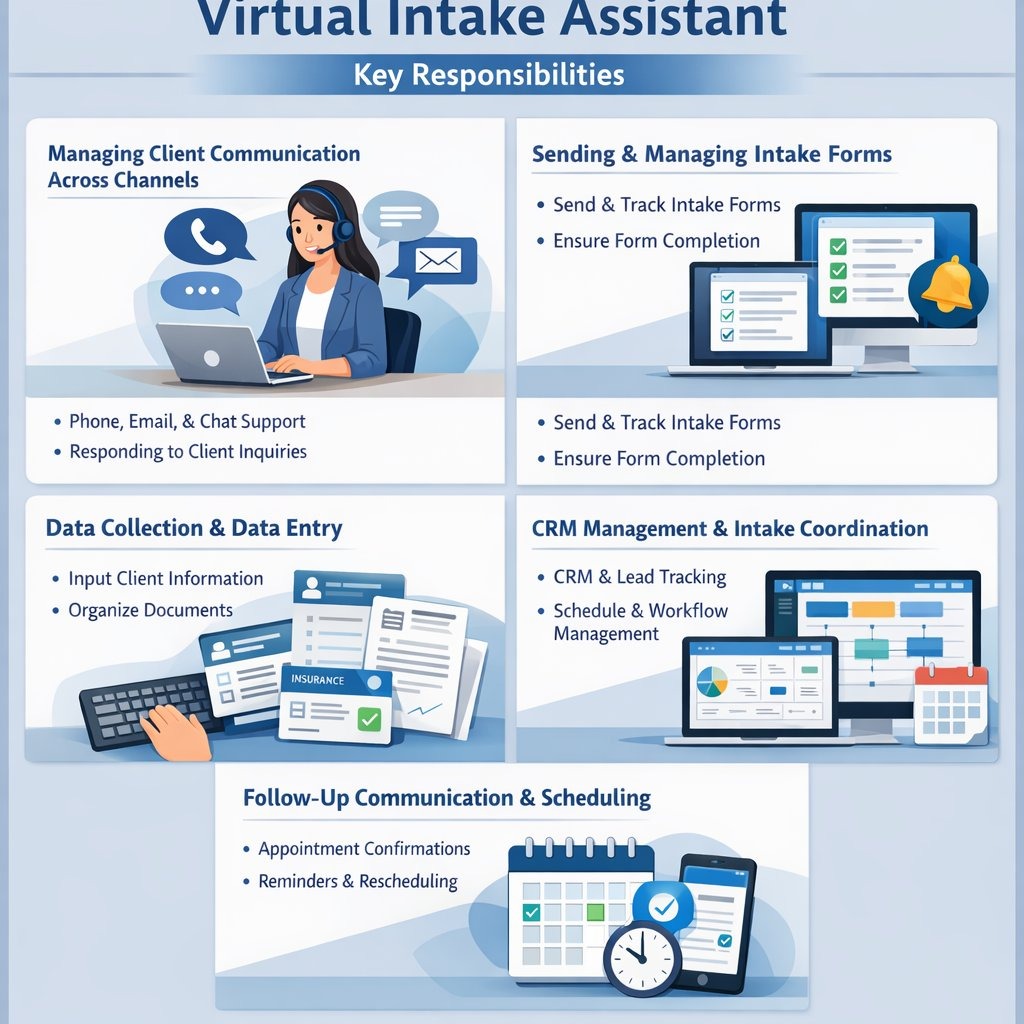
1. Managing Client Communication Across Channels
A virtual intake assistant handles:
- phone calls
- online contact forms
- email inquiries
- chat conversations
They ensure current and potential clients receive prompt responses and feel supported throughout the intake journey. Keeping clients informed at every stage builds trust and improves client satisfaction.
2. Sending and Managing Intake Forms
Virtual intake assistants:
- send intake forms digitally
- ensure forms are completed correctly
- review submissions for missing details
- follow up to collect essential information
This structured intake process reduces errors and ensures attorneys receive complete, usable client data.
3. Data Collection and Data Entry
Accurate data collection is essential for quality case evaluation.
Intake specialists collect:
- client information and contact details
- insurance information
- incident or legal matter details
- documentation and supporting files
They manage data entry into firm systems with attention to detail, ensuring records remain organized, searchable, and compliant.
4. CRM Management and Intake Coordination
A virtual intake assistant supports:
- CRM management
- intake coordinator workflows
- lead status tracking
- follow up scheduling
This allows the law firm team to focus on legal strategy instead of administrative tasks.
5. Follow-Up Communication and Scheduling
Consistent follow up communication is one of the most important intake functions.
Virtual intake assistants:
- schedule consultations
- confirm appointments
- manage reschedules
- conduct reminder follow ups
This improves show-up rates and increases the likelihood of converting inquiries into more clients.
📚 Also Read: Clio & MyCase Remote Staffing Workflows for Case Management
Virtual Intake Assistant vs Virtual Assistant
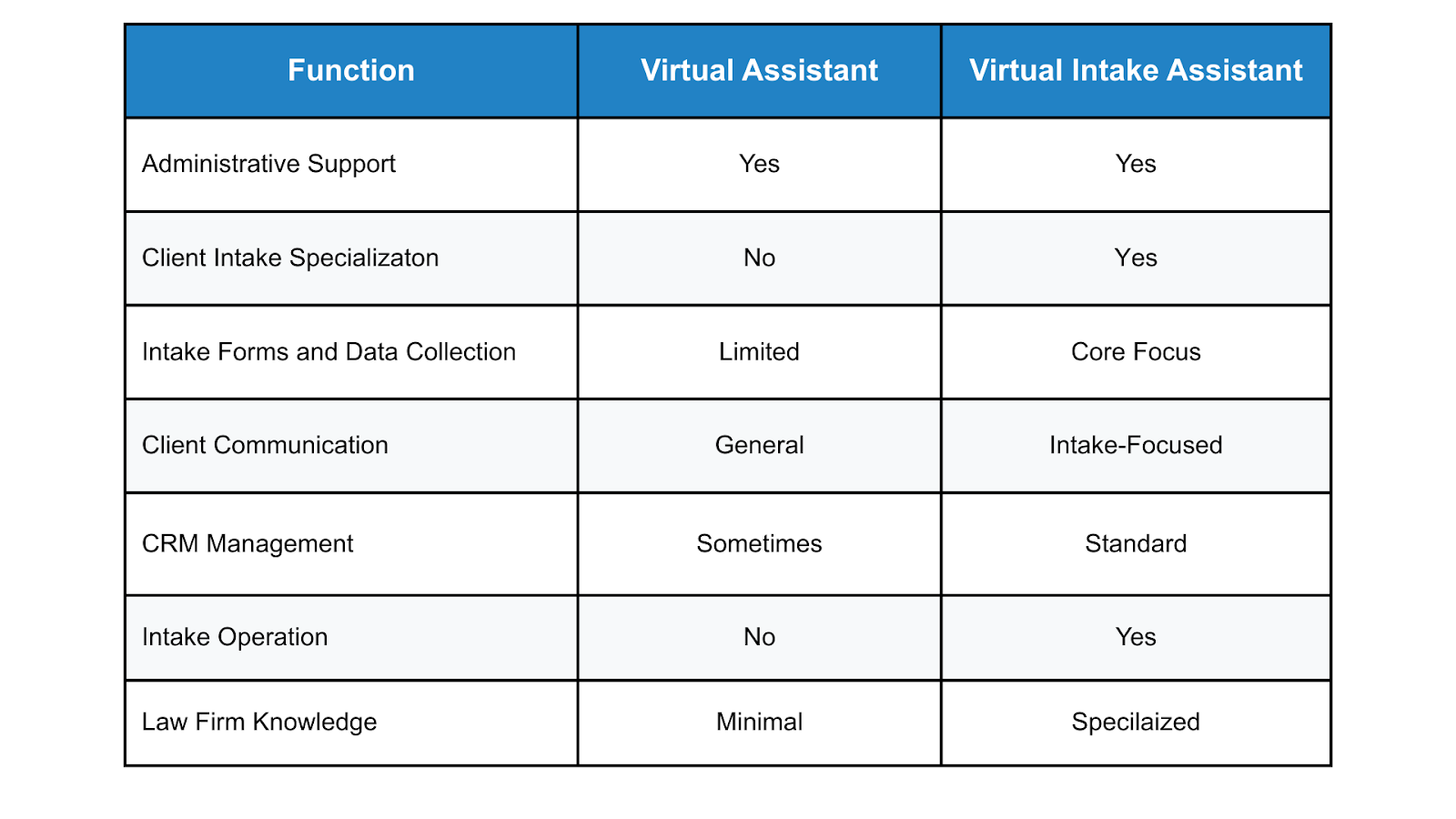
A virtual intake specialist is trained specifically for intake—not general marketing tasks or unrelated business support.
Practice Areas That Benefit Most from Virtual Intake Support
Virtual intake assistants are especially valuable for:
- personal injury
- employment law
- workers’ compensation
- family law
- immigration
- criminal defense
- bankruptcy
These practice areas rely on structured intake, detailed information, insurance verification, and timely communication.
Client Satisfaction and Practice Growth
Client satisfaction begins before representation starts. A smooth intake experience signals professionalism, organization, and reliability.
Benefits of a strong intake system include:
- better client relationships
- higher conversion rates
- improved internal efficiency
- stronger brand trust
A law firm that manages intake well positions itself for strategic growth rather than reactive staffing decisions.
Compliance, Security, and HIPAA Considerations
Virtual intake assistants must follow strict protocols for:
- client confidentiality
- HIPAA compliance (when patient intake or medical data is involved)
- secure systems access
- controlled data handling
Pre-vetted intake professionals are trained to manage sensitive client data responsibly and ethically.
Hiring a Virtual Intake Assistant: What to Look For
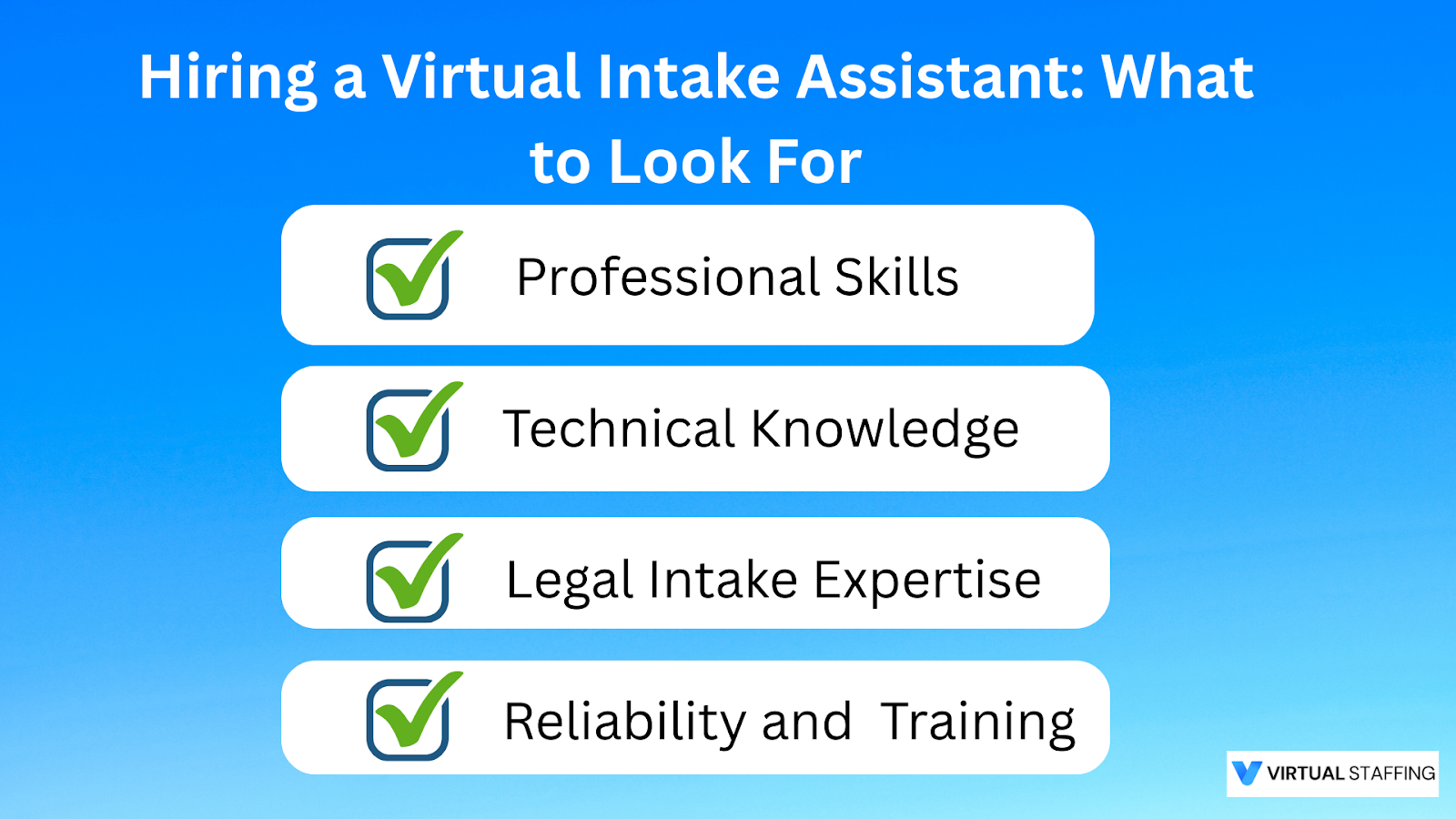
When hiring, law firms should prioritize:
Professional Skills
- strong communication ability
- professionalism on calls
- empathy and active listening
Technical Knowledge
- CRM systems
- intake software
- scheduling tools
Legal Intake Expertise
- understanding of intake processes
- ability to identify essential information
- familiarity with insurance and documentation requirements
Reliability and Training
- pre vetted professionals
- ongoing training
- quality assurance standards
How Virtual Staffing Supports Law Firm Intake
Virtual Staffing provides law firms with pre-vetted virtual intake assistants who specialize in legal intake operations.
Their intake professionals:
- support law firm systems seamlessly
- manage intake forms, data entry, and CRM management
- handle phone calls and inquiries professionally
- act as a strategic partner in firm growth
This allows firms to scale intake without sacrificing quality, professionalism, or client satisfaction.
Stop Losing Leads to Slow Response Times
Every minute you wait to respond is a minute your lead spends calling another firm. Partner with a pre-vetted intake specialist who knows how to qualify leads and close the gap between an inquiry and a client.

FAQs About Virtual Intake Assistant
1. What does a virtual intake assistant do for a law firm?
A virtual intake assistant manages the law firm’s intake process by responding to inquiries, handling phone calls, sending intake forms, collecting client information, performing data entry, updating CRM systems, scheduling consultations, and conducting follow ups. Their role ensures timely communication with potential clients while keeping intake operations organized and professional.
2. How is a virtual intake specialist different from a virtual assistant?
A virtual intake specialist focuses specifically on client intake, intake forms, data collection, and client communication for law firms. While a general virtual assistant may handle marketing tasks or administrative support, an intake specialist is trained to manage intake operations, qualify potential clients, and facilitate structured follow up communication within legal systems.
3. Can a virtual intake assistant handle sensitive client data and HIPAA compliance?
Yes, when properly trained. Pre-vetted virtual intake professionals are trained to manage client data securely, follow confidentiality protocols, and adhere to HIPAA compliance requirements when handling patient intake or medical information. Law firms remain responsible for oversight, but trained intake assistants operate within secure systems and documented processes.
4. How does hiring a virtual intake assistant improve client satisfaction?
Client satisfaction improves when inquiries receive timely responses, intake forms are processed efficiently, and clients are kept informed throughout the scheduling and follow up process. A consistent and professional intake experience builds trust early, strengthens client relationships, and increases the likelihood of converting inquiries into new clients.
5. How much does a virtual intake assistant cost compared to in-house staff?
The cost of a virtual intake assistant is typically lower than hiring a full-time in-house intake coordinator because firms avoid expenses such as benefits, payroll taxes, office space, and equipment. Many law firms use virtual intake support as a scalable solution to manage more clients without significantly increasing overhead.