

.webp)
Buying or selling a company involves more than agreeing on price and timing. Legal issues related to assets, ownership, financing, tax, and management can shape the value of a deal long after it closes. A mergers and acquisitions lawyer helps businesses navigate these challenges by advising on transactions across the full life cycle of a deal.
Understanding how mergers and acquisitions law works gives business owners, private equity firms, and law firms a clearer road map for reaching a successful transaction. If you are evaluating mergers, acquisitions, or strategic transactions, reading on will help you understand how legal support fits into modern deal making.
Key Takeaways About Mergers and Acquisitions Lawyers
- Mergers and acquisitions lawyers advise clients on strategic transactions
- They support acquisitions, mergers, joint ventures, and sales
- Due diligence and deal structure are critical to success
- Legal support helps reduce costs and protect value
What Is a Mergers and Acquisitions Lawyer?
A mergers and acquisitions lawyer is a corporate law professional who advises clients on mergers, acquisitions, joint ventures, and other strategic transactions. Their practice area focuses on transactions involving private companies, public companies, and public and private companies across different industries.
These lawyers commonly work with:
- Private equity firms and their portfolio companies
- Industry leading companies pursuing growth
- Founders selling a business or assets
- Management teams planning strategic alliances
Many law firms treat mergers and acquisitions as a core practice supported by a deep bench of lawyers with deep experience in acquisitions law.
📚 Also read: Why Virtual Legal Services Is a Game Changer for Solo Practitioners
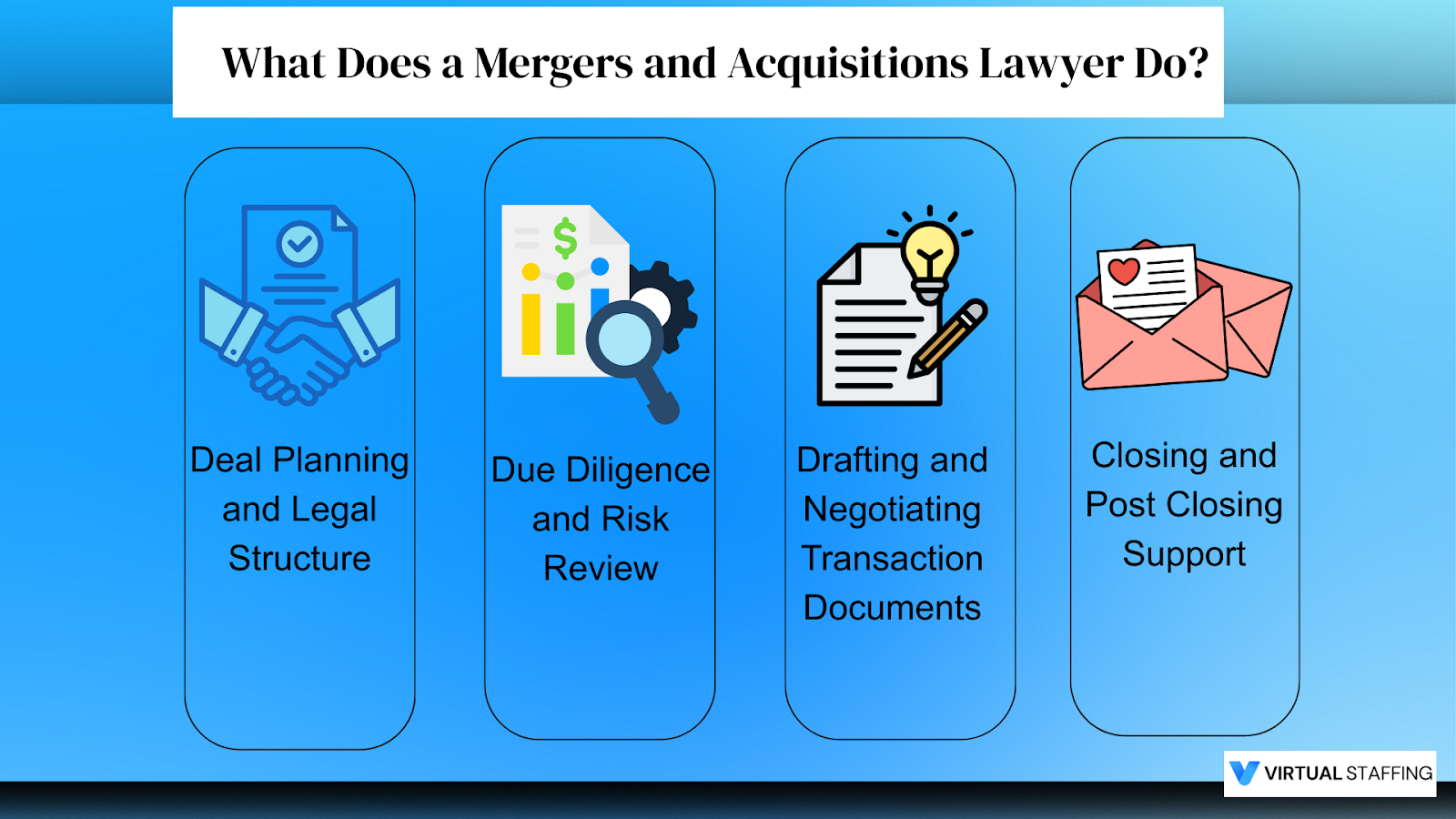
What Does a Mergers and Acquisitions Lawyer Do?
A mergers and acquisitions lawyer supports clients through the full spectrum of transactions, from early planning through closing. Their role combines legal advice, commercial judgment, and process improvement to manage risk and create value.
Deal Planning and Legal Structure
At the start of a transaction, the lawyer helps clients choose the best structure based on business goals and challenges. This planning phase affects tax exposure, financing options, and future operations.
Key planning tasks include:
- Structuring acquisitions, mergers, or leveraged buyouts
- Advising on joint ventures and strategic alliances
- Coordinating corporate law, tax, and financing considerations
This guidance is especially important for private equity and international firms managing complex deal portfolios.
Due Diligence and Risk Review
Due diligence is a core part of mergers and acquisitions. Lawyers review the company’s legal, commercial, and operational history to identify risks before signing.
Typical due diligence areas include:
- Contracts, assets, and liabilities
- Intellectual property and technology rights
- Executive compensation and employment matters
- Regulatory and compliance issues
Due diligence often involves large deal counts and tight timelines. Many law firms rely on support teams and knowledge management systems to handle document review efficiently.
📚 Also read: The Reality of Working With a Virtual Staff
Drafting and Negotiating Transaction Documents
Mergers and acquisitions lawyers draft and negotiate agreements that define rights, value, and responsibility. These documents are critical to completing a successful transaction.
Common transaction documents include:
- Purchase and sale agreements
- Disclosure schedules and representations
- Financing and closing documents
Clear drafting helps clients reduce costs and avoid disputes after closing.
Closing and Post Closing Support
After signing, lawyers guide clients through closing and post closing steps. This may involve coordination with local counsel, lenders, and regulators, especially in cross border or international deals.
Post closing support may include resolving legal issues or supporting integration across the company’s operations.
When Do You Need a Mergers and Acquisitions Lawyer?
A mergers and acquisitions lawyer is essential whenever a transaction changes ownership, control, or structure of a business. This applies to transactions involving private, public, and global platforms.
Common situations include:
- Buying or selling a company
- Mergers between private companies
- Acquisitions by private equity firms
- Strategic transactions involving portfolio companies
Early legal involvement helps businesses avoid problems that are difficult to fix later in the process.
Mergers vs Acquisitions: Understanding the Legal Difference
A merger usually involves one company being absorbed into another, with the surviving company assuming assets and liabilities. An acquisition occurs when a buyer purchases a company or its assets and gains control.
These structures affect:
- Ownership and management rights
- Financing and tax outcomes
- Regulatory obligations across industries
A mergers and acquisition lawyer advises clients on which structure best aligns with their commercial and strategic goals.
How a Mergers and Acquisitions Lawyer Protects Buyers
Buyers face risks related to assets, contracts, and undisclosed liabilities. An acquisitions lawyer helps buyers understand the true value of a target company.
Buyer protections include:
- Reviewing legal and commercial risks
- Confirming ownership of intellectual property
- Structuring representations and warranties
This legal work supports informed decision making and strengthens negotiating leverage.
How a Mergers and Acquisitions Lawyer Protects Sellers
Sellers also need legal protection to preserve value and manage risk. A lawyer helps sellers structure transactions that support clean exits.
Seller protections include:
- Limiting post sale liability
- Clarifying management and transition roles
- Securing payment and financing terms
Strong legal counsel helps sellers complete transactions with confidence.
Common Mistakes Businesses Make Without an M&A Lawyer
Without proper legal support, businesses often underestimate the complexity of mergers and acquisitions.
Common mistakes include:
- Ignoring tax and financing implications
- Overlooking intellectual property issues
- Weak due diligence processes
- Poorly drafted agreements
These mistakes can affect value and long term operations.
How Much Does a Mergers and Acquisitions Lawyer Cost?
Costs vary based on deal size, complexity, and industry. Law firms typically bill hourly, offer flat fees for smaller transactions, or use staged billing for larger deals.
Factors influencing cost include:
- Transaction value and structure
- Cross border or international elements
- Regulatory and industry challenges
Proper legal support often reduces total cost by preventing disputes and delays.
How to Choose the Right Mergers and Acquisitions Lawyer
Choosing the right lawyer requires evaluating experience, focus, and resources. Best law firms often combine deep knowledge with a strong team approach.
Consider the following:
- Experience with similar transactions and industries
- Deal count and practice focus
- Recognition by Chambers USA, Chambers Global, Chambers UK, or Legal 500
These indicators often reflect deep experience and strong client results.
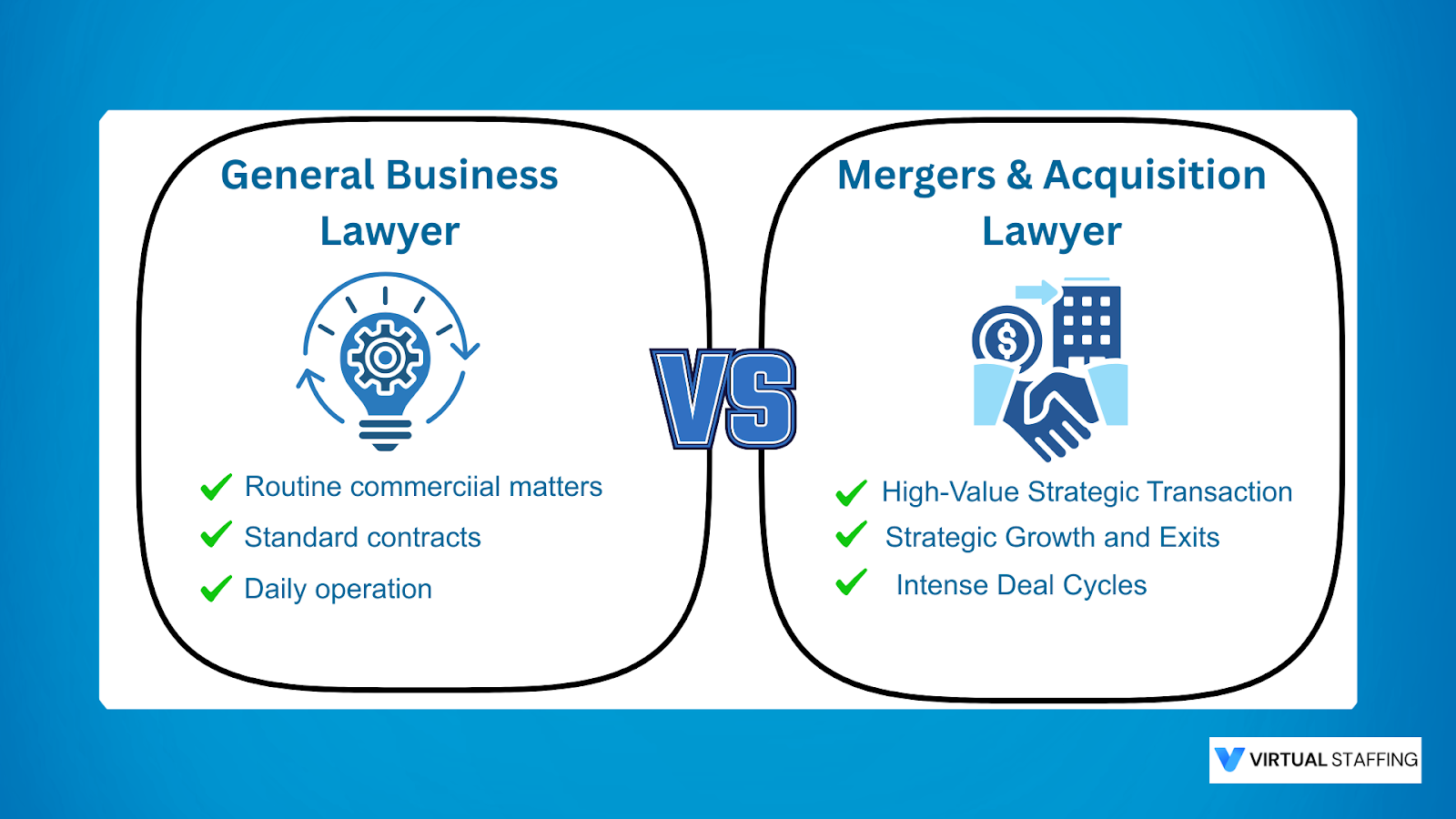
Mergers and Acquisitions Lawyer vs General Business Lawyer
General business lawyers handle routine commercial matters. Mergers and acquisitions lawyers focus on high value strategic transactions.
M&A practice requires:
- Deep experience in acquisitions and mergers
- Ability to advise across the full suite of legal services
- Coordination across corporate law, tax, and financing
For complex deals, specialized counsel is essential.
Why Law Firms Use Virtual Support in M&A Work
M&A transactions often create pressure on internal teams. Law firms use support models to improve efficiency during busy deal cycles.
Virtual support commonly assists with:
- Due diligence organization
- Transaction documentation
- Knowledge management and process improvement
📚 Also read: Benefits of Hiring a Virtual Assistant for Lawyers
How Virtual Legal Support Helps Mergers and Acquisitions Lawyers
Virtual legal support teams help law firms manage volume without expanding permanent headcount. This model supports firms handling multiple transactions at once.
Support tasks often include:
- Data room and asset tracking
- Draft preparation and review
- Transaction timelines and coordination
Industries That Often Need Mergers and Acquisitions Lawyers
Mergers and acquisitions activity spans many industries and markets.
Industries with frequent transactions include:
- Life sciences and healthcare
- Technology and media industries
- Manufacturing and commercial services
- Global and international firms
Each industry brings unique regulatory and commercial considerations.
What Happens If an M&A Deal Goes Wrong?
Disputes may arise when expectations are unclear or risks were missed. These issues can affect value and relationships.
A mergers and acquisitions lawyer helps:
- Resolve disputes between parties
- Enforce transaction terms
- Protect clients throughout the deal life cycle
Final Thoughts:
Mergers and acquisitions lawyers play a central role in guiding businesses through complex transactions. Their deep knowledge of corporate law, acquisitions, and strategic transactions helps clients manage risk and protect value.
Law firms handling mergers and acquisitions often rely on strong support systems to stay efficient. If you need remote legal support staff to assist with due diligence, transactions, or deal management, VirtualStaffing provides a leading provider solution designed to support law firms and clients across the full spectrum of M&A work.
Contact us today to learn how we can help you build a more efficient, productive, and scalable law practice.

FAQs About Mergers and Acquisitions Lawyers
Do small businesses need a mergers and acquisitions lawyer?
Yes. Even smaller transactions involve legal, tax, and commercial risks that can affect long term value.
When should I hire a mergers and acquisitions lawyer?
Ideally before negotiations begin so structure, financing, and risk are addressed early.
Can an M&A lawyer help negotiate value?
They do not set price, but legal findings and deal structure often influence value.
Are mergers and acquisitions lawyers only for large companies?
No. They work with private companies, public companies, and private equity backed businesses.
How long does the mergers and acquisitions process take?
Many deals take three to six months, while cross border or complex transactions may take longer.